

SpyGlass Cholangioscopy & Pancreatoscopy
- Advanced Endoscopy
- Upper GI Endoscopy
- Lower GI Endoscopy (Colonoscopy)
- ERCP (CBD Stone Removal / Stenting)
- EUS Guided Procedures (FNA/FNB, Drainage)
- Single / Double Balloon Enteroscopy
- Esophageal / Antral Stenting
- Esophageal & Anorectal Manometry
- Foreign Body Removal
- PEG Tube Placement
- POEM (Peroral Endoscopic Myotomy)
- STER (Submucosal Tunneling Endoscopic Resection)
- ESD (Endoscopic Submucosal Dissection)
- EMR (Endoscopic Mucosal Resection)
- Spyglass for Pancreatic Biliary Pathology
- Gastrointestinal Bleeding
- Biliary & Pancreatic Stenting
- Anti Reflux Procedures
SpyGlass: Precision Endoscopy for Bile & Pancreatic Ducts
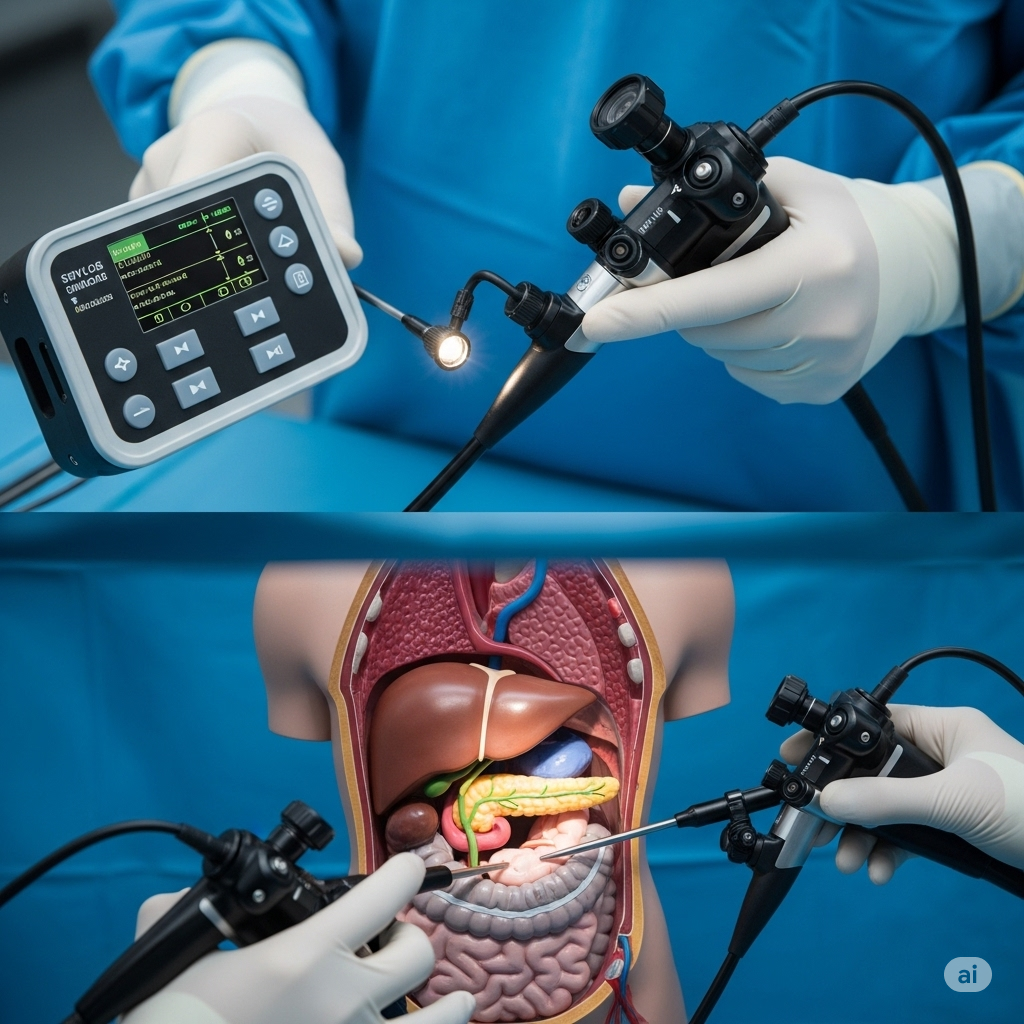
SpyGlass Cholangioscopy & Pancreatoscopy: Direct Visualization for Complex Biliary and Pancreatic Conditions
While ERCP (Endoscopic Retrograde Cholangiopancreatography) and EUS (Endoscopic Ultrasound) are powerful tools for diagnosing and treating bile duct and pancreatic duct issues, sometimes a direct visual inspection is needed for definitive diagnosis or more effective treatment. **SpyGlass Cholangioscopy and Pancreatoscopy**, performed by Dr. Neeraj Dhar, is a state-of-the-art procedure that provides gastroenterologists with this invaluable direct vision within these narrow and complex ducts.
What is SpyGlass Cholangioscopy & Pancreatoscopy?
The SpyGlass DS Direct Visualization System is an advanced endoscopic technology that allows for direct visualization of the bile ducts (cholangioscopy) and pancreatic ducts (pancreatoscopy). A tiny, flexible camera (the SpyGlass scope) is passed through the working channel of a standard ERCP endoscope, providing high-resolution, real-time images of the inside of these ducts. This direct visual access enables:
- Improved Diagnostic Accuracy: To evaluate indeterminate strictures and differentiate between benign and malignant conditions.
- Targeted Biopsies: To obtain tissue samples from suspicious areas under direct visualization, improving diagnostic yield compared to blind sampling.
- Enhanced Therapeutic Capabilities: To precisely guide interventions like electrohydraulic lithotripsy (EHL) or laser lithotripsy for breaking up difficult or large stones that are resistant to conventional ERCP methods.
Indications for SpyGlass Procedures:
SpyGlass is typically used in complex cases where standard ERCP or imaging studies have not provided a clear diagnosis or effective treatment. Common indications include:
- Indeterminate Biliary or Pancreatic Strictures: To determine if a narrowing in the ducts is caused by cancer, inflammation, or other benign conditions.
- Difficult or Large Bile Duct Stones: Stones that are too large, impacted, or numerous to be removed by standard ERCP techniques. SpyGlass allows for direct visual guidance of stone fragmentation (lithotripsy).
- Chronic Pancreatitis: To evaluate and treat pancreatic duct stones or strictures, which can contribute to pain and recurrent pancreatitis.
- Evaluation of Intraductal Papillary Mucinous Neoplasms (IPMNs): To assess the extent and characteristics of these cystic lesions of the pancreas.
- Post-Surgical Anatomy: In patients with altered anatomy where conventional ERCP is challenging.
Preparation for the Procedure:
- You will need to fast for at least 8 hours before the procedure.
- All medications, especially blood thinners, must be reviewed and adjusted by Dr. Dhar.
- Discuss your full medical history and any allergies with your doctor.
- The procedure is performed under sedation or general anesthesia, so arrange for someone to drive you home afterward.
What to Expect During the SpyGlass Procedure:
- The procedure is performed in an endoscopy suite under deep sedation or general anesthesia.
- It often begins like a standard ERCP. The ERCP endoscope is guided through your mouth, esophagus, stomach, and into the duodenum, reaching the opening of the bile and pancreatic ducts (ampulla).
- Once the ampulla is cannulated, the ultra-thin SpyGlass fiber optic catheter is passed through the ERCP scope's working channel and advanced directly into the bile or pancreatic duct.
- Dr. Dhar then directly visualizes the inside of the duct on a high-definition monitor. This allows for meticulous examination of the ductal lining, precise targeting of lesions, or direct management of stones.
- If needed, tiny accessories like biopsy forceps or lithotripsy probes are passed through the SpyGlass scope to obtain tissue samples or fragment stones.
- The procedure duration can vary based on the complexity, often taking longer than a standard ERCP.
Recovery and Post-Procedure Care:
- You will be monitored in a recovery area until the effects of sedation wear off.
- You may experience mild abdominal discomfort or a sore throat.
- You will typically be given instructions on diet and activity.
- Monitoring for potential complications, such as pancreatitis, bleeding, or infection, is crucial.
Why Choose Dr. Neeraj Dhar for SpyGlass Procedures?
Performing SpyGlass Cholangioscopy and Pancreatoscopy requires advanced endoscopic skills, specialized training, and a deep understanding of complex biliary and pancreatic diseases. Dr. Neeraj Dhar is a highly experienced gastroenterologist in Faridabad who is proficient in utilizing this cutting-edge technology. His expertise ensures that patients with challenging diagnoses or difficult-to-treat conditions in the bile and pancreatic ducts receive the most accurate diagnosis and effective, minimally invasive treatment available, often avoiding more invasive surgical interventions.
If you have complex biliary or pancreatic issues, such as an indeterminate stricture or difficult stones, consult Dr. Neeraj Dhar to discuss whether SpyGlass is the right diagnostic or therapeutic option for you.