

Minimally Invasive Surgery (MIS)
- GI & Bariatric Surgery
- Whipple Surgery
- Bariatric Surgery
- Liver Resection
- Gastro Esophageal Surgeries
- Colorectal Surgeries
- Appendectomy
- Hemorrhoidectomy
- Partial Colectomy
- Nissen Fundoplication
- Piles Surgery
- Peptic / Gastric Ulcer Treatment
- Gastrointestinal Surgery
- Surgery for Morbid Obesity
- Hepatopancreaticobiliary Surgery
- Post-Cholecystectomy Bile Duct Injury
- Incisional Hernia
- Minimally Invasive Surgery
- Gallbladder (Biliary) Stone Treatment
Minimally Invasive Surgery (MIS)
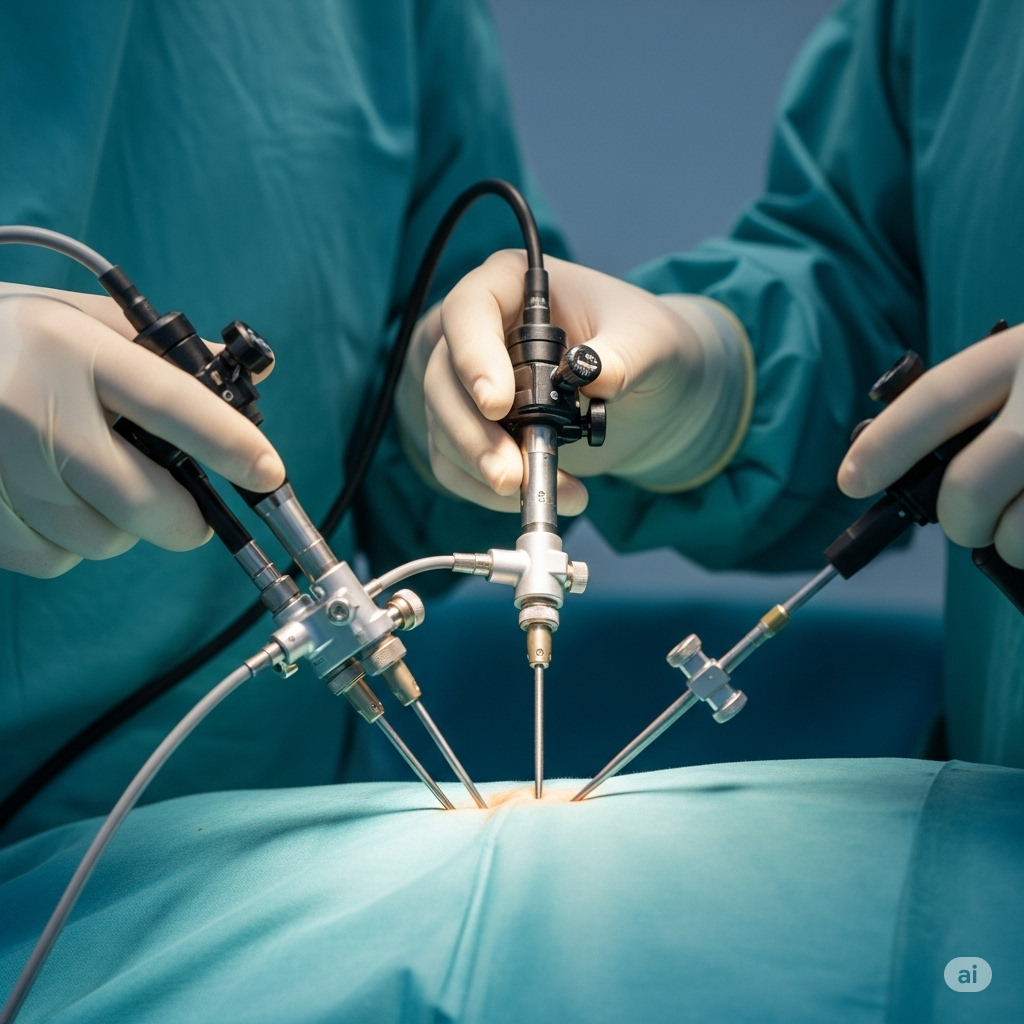
Minimally Invasive Surgery (MIS): Advanced Techniques for GI Health
**Minimally Invasive Surgery (MIS)** represents a significant advancement in modern surgical techniques, allowing surgeons to perform complex procedures through small incisions, often leading to less pain, shorter hospital stays, and faster recovery times compared to traditional open surgery. For conditions affecting the gastrointestinal (GI) tract, MIS techniques like **laparoscopic surgery** and **robotic-assisted surgery** have become the preferred approach for many procedures. While **Dr. Neeraj Dhar, a leading Gastroenterologist in Faridabad, does not perform the surgical operations himself**, his expertise is **crucial for the comprehensive care path** of patients undergoing or considering MIS for GI conditions. His role involves precise **diagnosis, pre-operative optimization, and expert post-operative management of gastrointestinal complications.**
What is Minimally Invasive Surgery?
Instead of making one large incision, MIS involves:
- Making several small incisions (typically 0.5-1.5 cm) in the abdomen or other body parts.
- Inserting a laparoscope (a thin tube with a camera) through one incision to visualize the internal organs on a monitor.
- Inserting specialized surgical instruments through other small incisions to perform the operation.
- For **robotic-assisted surgery**, robotic arms controlled by the surgeon offer enhanced dexterity, precision, and 3D visualization.
Advantages of Minimally Invasive Surgery:
Patients undergoing MIS often experience numerous benefits:
- **Smaller Incisions:** Leading to less scarring and improved cosmetic outcomes.
- **Reduced Pain:** Less tissue trauma results in less post-operative pain.
- **Shorter Hospital Stay:** Patients can often return home sooner.
- **Faster Recovery:** Quicker return to normal activities and work.
- **Lower Risk of Complications:** Reduced risk of wound infections, bleeding, and incisional hernias.
Common GI Conditions Treated with MIS:
Minimally invasive techniques are now widely used for a variety of gastrointestinal surgical procedures, many of which are also within the scope of conditions managed by Dr. Neeraj Dhar from a medical and diagnostic perspective:
- **Gallbladder Removal (Laparoscopic Cholecystectomy):** For gallstones and gallbladder inflammation.
- **Appendectomy:** For appendicitis.
- **Hernia Repair:** Including incisional, inguinal, and umbilical hernias.
- **Bariatric Surgery:** Such as laparoscopic sleeve gastrectomy and gastric bypass for morbid obesity.
- **Anti-reflux Surgery (Nissen Fundoplication):** For severe GERD and hiatal hernia.
- **Colorectal Surgery:** For diverticulitis, polyps, or certain colorectal cancers.
- **Liver Resection & Pancreatic Surgery:** For certain tumors or cysts, often complex.
- **Adhesiolysis:** Breaking down scar tissue causing abdominal pain or obstruction.
Dr. Neeraj Dhar's Crucial Role in the MIS Pathway:
While the actual cutting and stitching in MIS is performed by a surgical specialist, Dr. Neeraj Dhar, as a Gastroenterologist, is an **essential partner in the multidisciplinary care team** for patients benefiting from Minimally Invasive Surgery. His expertise is invaluable at several stages:
- **1. Precise Pre-operative Diagnosis & Staging:**
- Dr. Dhar utilizes advanced endoscopic techniques such as **Upper GI Endoscopy, Colonoscopy, Endoscopic Ultrasound (EUS), and ERCP (Endoscopic Retrograde Cholangiopancreatography)** to accurately diagnose the GI condition, determine its extent, and guide whether MIS is the most appropriate treatment option.
- For example, EUS can precisely stage pancreatic or esophageal cancers, and ERCP can remove bile duct stones or place stents before gallbladder surgery or HPB procedures.
- **2. Pre-operative GI Optimization:**
- He ensures that the patient's gastrointestinal tract is in the best possible condition before surgery. This might involve managing active inflammation (e.g., in IBD), treating H. pylori infection before bariatric surgery, or addressing severe constipation that could complicate post-operative recovery.
- His medical management helps minimize surgical risks and improve overall outcomes.
- **3. Management of Post-operative GI Complications:**
- Even with MIS, gastrointestinal complications can occur. Dr. Dhar's endoscopic skills are vital in managing these, such as:
- **Endoscopic Dilation:** For strictures (narrowing) that can occur after bariatric surgery or esophageal procedures.
- **Endoscopic Stent Placement:** To manage leaks from surgical anastomoses or to drain fluid collections.
- **Management of Post-Surgical Bleeding:** Endoscopic hemostasis.
- **Diagnosis and Treatment of New-Onset GI Symptoms:** Addressing issues like dumping syndrome, malabsorption, or persistent pain.
- Even with MIS, gastrointestinal complications can occur. Dr. Dhar's endoscopic skills are vital in managing these, such as:
- **4. Long-term Follow-up and Surveillance:**
- For many conditions treated by MIS (e.g., bariatric surgery, resections for IBD, or certain cancers), long-term gastroenterological follow-up is crucial. Dr. Dhar monitors for nutritional deficiencies, recurrence of disease, or the development of new GI issues.
- **5. Multidisciplinary Collaboration:**
- Dr. Dhar works seamlessly with general surgeons, bariatric surgeons, HPB surgeons, and other specialists, contributing his gastroenterological perspective to create the most comprehensive and effective treatment plan for each patient.
By integrating his advanced diagnostic and therapeutic endoscopic capabilities with surgical expertise, Dr. Neeraj Dhar ensures that patients undergoing Minimally Invasive Surgery for gastrointestinal conditions receive holistic, state-of-the-art care in Faridabad, leading to superior clinical outcomes and a better quality of life.