

Hemorrhoidectomy (Piles Surgery)
- GI & Bariatric Surgery
- Whipple Surgery
- Bariatric Surgery
- Liver Resection
- Gastro Esophageal Surgeries
- Colorectal Surgeries
- Appendectomy
- Hemorrhoidectomy
- Partial Colectomy
- Nissen Fundoplication
- Peptic / Gastric Ulcer Treatment
- Piles Surgery
- Gastrointestinal Surgery
- Surgery for Morbid Obesity
- Hepatopancreaticobiliary Surgery
- Post-Cholecystectomy Bile Duct Injury
- Incisional Hernia
- Minimally Invasive Surgery
- Gallbladder (Biliary) Stone Treatment
Hemorrhoidectomy (Piles Surgery)
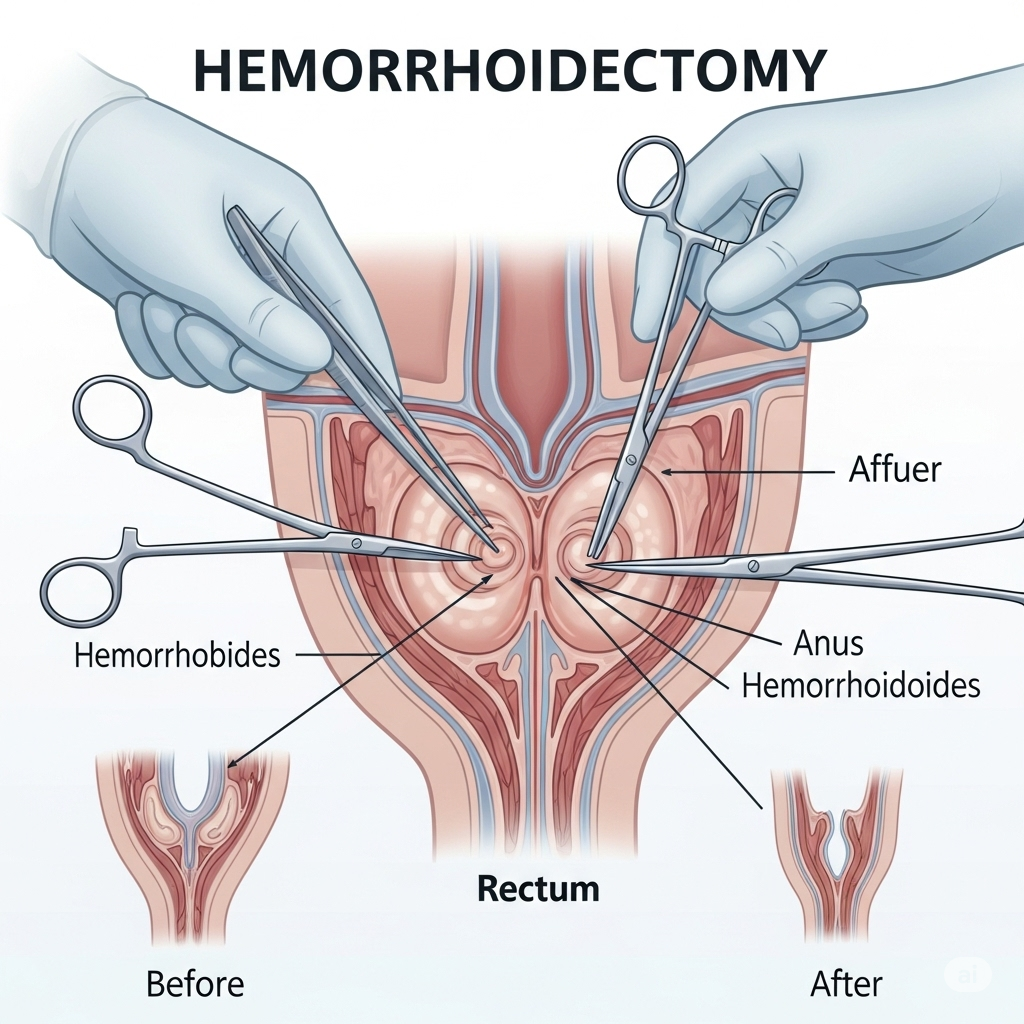
Hemorrhoidectomy: Comprehensive Management of Severe Piles
**Hemorrhoidectomy**, commonly known as **piles surgery**, is a surgical procedure performed to remove severely swollen or prolapsed hemorrhoids (piles) that have not responded to conservative treatments. While the surgery itself is performed by a surgical specialist, Dr. Neeraj Dhar, a leading **Gastroenterologist** in Faridabad, plays a critical role in the comprehensive care of patients suffering from hemorrhoids. His expertise is vital for accurate diagnosis, determining the appropriate course of treatment (including non-surgical options), and providing crucial pre- and post-surgical guidance and follow-up.
Understanding Hemorrhoids and When Surgery is Needed:
**Hemorrhoids** are swollen veins in the rectum and anus that can cause discomfort, bleeding, and pain. They can be internal (inside the rectum) or external (under the skin around the anus). While many cases of hemorrhoids can be managed with lifestyle changes, dietary modifications, and medications, surgery may be necessary for advanced cases.
Indications for Hemorrhoidectomy:
- **Grade III or IV Internal Hemorrhoids:** These are prolapsed hemorrhoids that either require manual pushing back inside or remain prolapsed outside the anus permanently.
- **Large External Hemorrhoids:** Especially those causing significant pain, itching, or hygiene issues.
- **Thrombosed External Hemorrhoids:** When a blood clot forms within an external hemorrhoid, causing severe, sudden pain.
- **Persistent Bleeding:** When bleeding from hemorrhoids is severe or chronic, leading to anemia.
- **Failure of Non-Surgical Treatments:** When methods like rubber band ligation, sclerotherapy, or infrared coagulation have not been successful.
Types of Hemorrhoidectomy Procedures (Performed by a Surgical Team):
Several surgical techniques are used for hemorrhoidectomy, chosen based on the type, size, and severity of the hemorrhoids:
1. Excisional Hemorrhoidectomy (Conventional Hemorrhoidectomy):
- This is the most common and often considered the most effective surgical option for severe internal and external hemorrhoids.
- The surgeon makes incisions around the hemorrhoids and carefully removes the swollen tissue.
- The incision sites may be left open or partially closed with sutures, depending on the surgeon's preference and the extent of the hemorrhoids.
- It offers a high success rate but can involve significant post-operative pain.
2. Stapled Hemorrhoidopexy (Procedure for Prolapse and Hemorrhoids - PPH):
- Instead of removing the hemorrhoids directly, this procedure uses a stapling device to remove a circular portion of the hemorrhoidal tissue and reposition the remaining tissue higher within the anal canal.
- This reduces blood flow to the hemorrhoids, causing them to shrink, and also lifts the prolapsed tissue.
- Generally associated with less post-operative pain and a quicker recovery than conventional hemorrhoidectomy.
3. Ligasure Hemorrhoidectomy:
- This technique uses a specialized energy device to simultaneously seal off the blood vessels supplying the hemorrhoid and cut away the tissue.
- It results in less bleeding and often less post-operative pain compared to traditional methods, potentially leading to a faster recovery.
Dr. Neeraj Dhar's Crucial Role in Hemorrhoid Management:
As a gastroenterologist, Dr. Neeraj Dhar provides essential care throughout the diagnosis and treatment pathway for hemorrhoids, working collaboratively with surgical colleagues when surgery is indicated:
- **Accurate Diagnosis and Exclusion of Other Conditions:** Rectal bleeding, pain, or discomfort can be symptoms of various gastrointestinal conditions, some more serious than hemorrhoids (e.g., anal fissures, polyps, inflammatory bowel disease, or even colorectal cancer). Dr. Dhar performs thorough examinations, including sometimes **sigmoidoscopy or colonoscopy**, to accurately diagnose the cause of symptoms and rule out other underlying conditions, ensuring appropriate treatment.
- **Non-Surgical Management:** For many patients, especially those with Grade I or II internal hemorrhoids, Dr. Dhar provides comprehensive guidance on non-surgical treatments. This includes dietary and lifestyle modifications (increasing fiber and fluid intake), medications to relieve symptoms, and in-office procedures like **rubber band ligation**, which can often effectively treat smaller internal hemorrhoids without surgery.
- **Determining Surgical Candidacy and Referral:** When non-surgical methods fail, or for severe cases of hemorrhoids, Dr. Dhar accurately assesses the need for surgery and provides timely and appropriate referral to an experienced colorectal or general surgeon.
- **Pre-surgical Optimization:** He advises on preparing for surgery, including dietary recommendations and bowel preparation, to ensure the best possible surgical outcome.
- **Post-operative Care and Follow-up:** After surgery, Dr. Dhar can provide follow-up care for any persistent gastrointestinal symptoms, including managing constipation or bowel irregularities that might arise, and ensuring overall digestive health during recovery.
If you're experiencing symptoms of hemorrhoids, such as rectal bleeding, pain, or discomfort, seeking timely evaluation from a gastroenterologist like Dr. Neeraj Dhar is crucial. His expertise ensures an accurate diagnosis and a personalized treatment plan, whether it involves conservative management or a seamless referral for surgical intervention, promoting your digestive well-being in Faridabad.