

EUS Guided Procedures (FNA/FNB, Drainage) - Advanced Endoscopy
- Advanced Endoscopy
- Upper GI Endoscopy
- Lower GI Endoscopy (Colonoscopy)
- ERCP (CBD Stone Removal / Stenting)
- EUS Guided Procedures (FNA/FNB, Drainage)
- Single / Double Balloon Enteroscopy
- Esophageal / Antral Stenting
- Esophageal & Anorectal Manometry
- Foreign Body Removal
- PEG Tube Placement
- POEM (Peroral Endoscopic Myotomy)
- STER (Submucosal Tunneling Endoscopic Resection)
- ESD (Endoscopic Submucosal Dissection)
- EMR (Endoscopic Mucosal Resection)
- Spyglass for Pancreatic Biliary Pathology
- Gastrointestinal Bleeding
- Biliary & Pancreatic Stenting
- Anti Reflux Procedures
Endoscopic Ultrasound (EUS) Guided Procedures
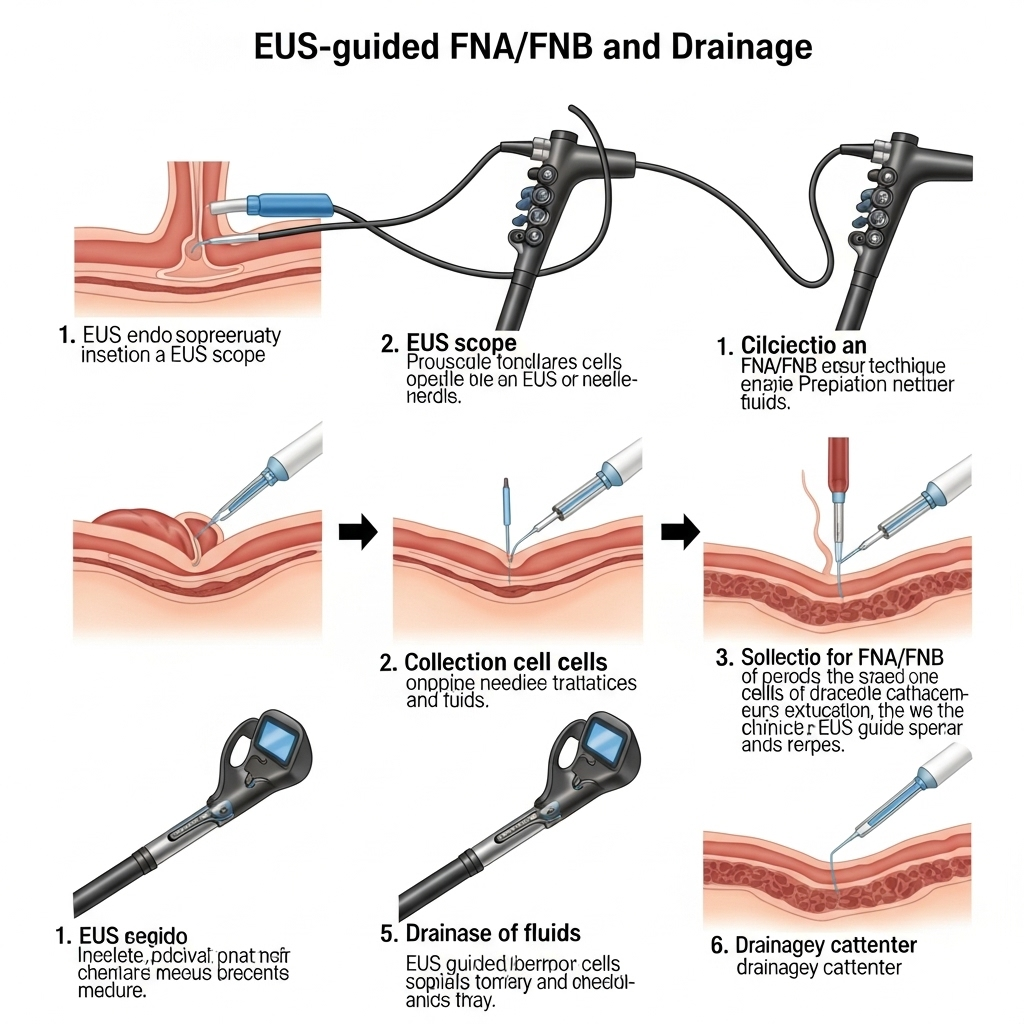
Endoscopic Ultrasound (EUS) Guided Procedures: Precision in Diagnosis & Therapy
Endoscopic Ultrasound (EUS) is an advanced, minimally invasive procedure that combines endoscopy and ultrasound technology to obtain detailed images and evaluate conditions of the gastrointestinal tract wall, as well as adjacent organs like the pancreas, bile ducts, and lymph nodes. EUS is unique because it allows for very close examination of these organs, providing superior resolution compared to external ultrasound or even CT/MRI in certain cases. Beyond imaging, EUS can also guide diagnostic tissue sampling (FNA/FNB) and therapeutic interventions.
What is Endoscopic Ultrasound (EUS)?
During an EUS, Dr. Neeraj Dhar uses a specialized endoscope (called an echoendoscope) that has a tiny ultrasound transducer at its tip. This endoscope is passed into the upper GI tract (esophagus, stomach, duodenum) or lower GI tract (rectum/colon). Once in position, the ultrasound probe emits sound waves to create detailed images of the layers of the GI tract wall and surrounding organs that are otherwise difficult to visualize directly.
Why are EUS Guided Procedures Performed? (Indications)
EUS is a versatile tool used for both diagnostic and therapeutic purposes:
Diagnostic Indications:
- Pancreatic Diseases: Detailed evaluation of pancreatic masses (e.g., suspected cancer), cysts, or pancreatitis. EUS is highly effective for early detection and staging of pancreatic cancer.
- Biliary Diseases: Assessment of bile duct stones, strictures, or tumors causing jaundice.
- Lymph Node Evaluation: To visualize and biopsy abnormal lymph nodes in the chest (mediastinum) or abdomen (celiac, peripancreatic).
- Submucosal Lesions: Characterizing and diagnosing growths located beneath the lining of the esophagus, stomach, or duodenum, distinguishing them from benign or malignant conditions.
- Staging of GI Cancers: Precisely staging cancers of the esophagus, stomach, rectum, and pancreas to determine the extent of disease and guide treatment plans.
- Undiagnosed Abdominal Pain: Investigating the cause of chronic abdominal pain when other tests are inconclusive.
Therapeutic Indications (EUS-Guided Interventions):
- Fine Needle Aspiration (FNA) / Fine Needle Biopsy (FNB): EUS precisely guides a thin needle to obtain tissue samples from suspicious lesions (e.g., tumors, cysts, lymph nodes) in the pancreas, bile duct, or other organs for accurate pathological diagnosis. This is often crucial for cancer diagnosis and treatment planning.
- Cyst and Abscess Drainage: EUS can safely guide the drainage of pancreatic pseudocysts or abscesses by creating a pathway through the stomach or duodenal wall, placing a stent to allow internal drainage.
- Celiac Plexus Block/Neurolysis: For patients with severe, chronic pain (often associated with pancreatic cancer), EUS can guide the injection of pain-relieving medication or nerve-destroying agents around the celiac plexus nerves.
- Biliary and Gallbladder Drainage: In select cases, EUS can be used to guide internal drainage procedures for biliary obstruction or gallbladder issues when ERCP is not feasible.
Preparation for the Procedure:
Preparation depends on the area being examined:
- Upper EUS (Esophagus, Stomach, Duodenum): You will need to fast for at least 6-8 hours before the procedure (no food or drink) to ensure your upper GI tract is empty.
- Lower EUS (Rectum/Colon): Bowel preparation (similar to colonoscopy prep, but often less extensive) might be required to ensure clear visualization of the lower GI tract.
- Medication Review: Inform Dr. Dhar about all your medications, especially blood thinners, as adjustments may be necessary to minimize bleeding risk during FNA/FNB or drainage.
- Arranging for a Ride: Since you will receive sedation or general anesthesia, you must arrange for someone to drive you home after the procedure and stay with you.
What to Expect During the Procedure:
- You will receive **conscious sedation** or **general anesthesia** to ensure you are comfortable and relaxed throughout the procedure.
- You will lie on your side, and the echoendoscope will be gently passed through your mouth (for upper EUS) or anus (for lower EUS).
- Dr. Dhar will use the ultrasound images to navigate and examine the organs of interest. If an intervention like FNA/FNB or drainage is performed, it will be done under real-time EUS guidance.
- The procedure duration varies depending on the complexity, typically ranging from 30 minutes to 1.5 hours.
Recovery and Post-Procedure Care:
- After the EUS, you will be monitored in a recovery area until the effects of anesthesia or sedation wear off.
- You may experience a mild sore throat, bloating, or mild discomfort, which usually resolves quickly.
- Once fully alert, you can typically resume a light diet unless otherwise instructed.
- It's crucial to avoid driving, operating machinery, or making important decisions for the rest of the day due to the lingering effects of sedation.
Why Choose Dr. Neeraj Dhar for EUS Guided Procedures?
Dr. Neeraj Dhar is a highly skilled and experienced gastroenterologist with specialized training in advanced endoscopic procedures, including a high volume of complex EUS-guided diagnostic and therapeutic interventions. He is adept at utilizing cutting-edge EUS technology for precise imaging, accurate tissue sampling (FNA/FNB), and safe drainage procedures. Dr. Dhar's expertise is crucial for managing challenging gastrointestinal and pancreatic-biliary conditions, ensuring patients receive the most accurate diagnosis and effective, minimally invasive treatment options in Faridabad. His commitment to patient safety and comprehensive care makes him a trusted choice for EUS procedures.
If you have been recommended for an EUS procedure for diagnosis or treatment of a digestive or pancreatic-biliary condition, consult Dr. Neeraj Dhar for expert and compassionate care.