
Partial Colectomy (Bowel Resection)
- GI & Bariatric Surgery
- Whipple Surgery
- Bariatric Surgery
- Liver Resection
- Gastro Esophageal Surgeries
- Colorectal Surgeries
- Appendectomy
- Hemorrhoidectomy
- Partial Colectomy
- Nissen Fundoplication
- Peptic / Gastric Ulcer Treatment
- Piles Surgery
- Gastrointestinal Surgery
- Surgery for Morbid Obesity
- Hepatopancreaticobiliary Surgery
- Post-Cholecystectomy Bile Duct Injury
- Incisional Hernia
- Minimally Invasive Surgery
- Gallbladder (Biliary) Stone Treatment
Partial Colectomy (Bowel Resection)
Partial Colectomy: Surgical Treatment for Colon Conditions
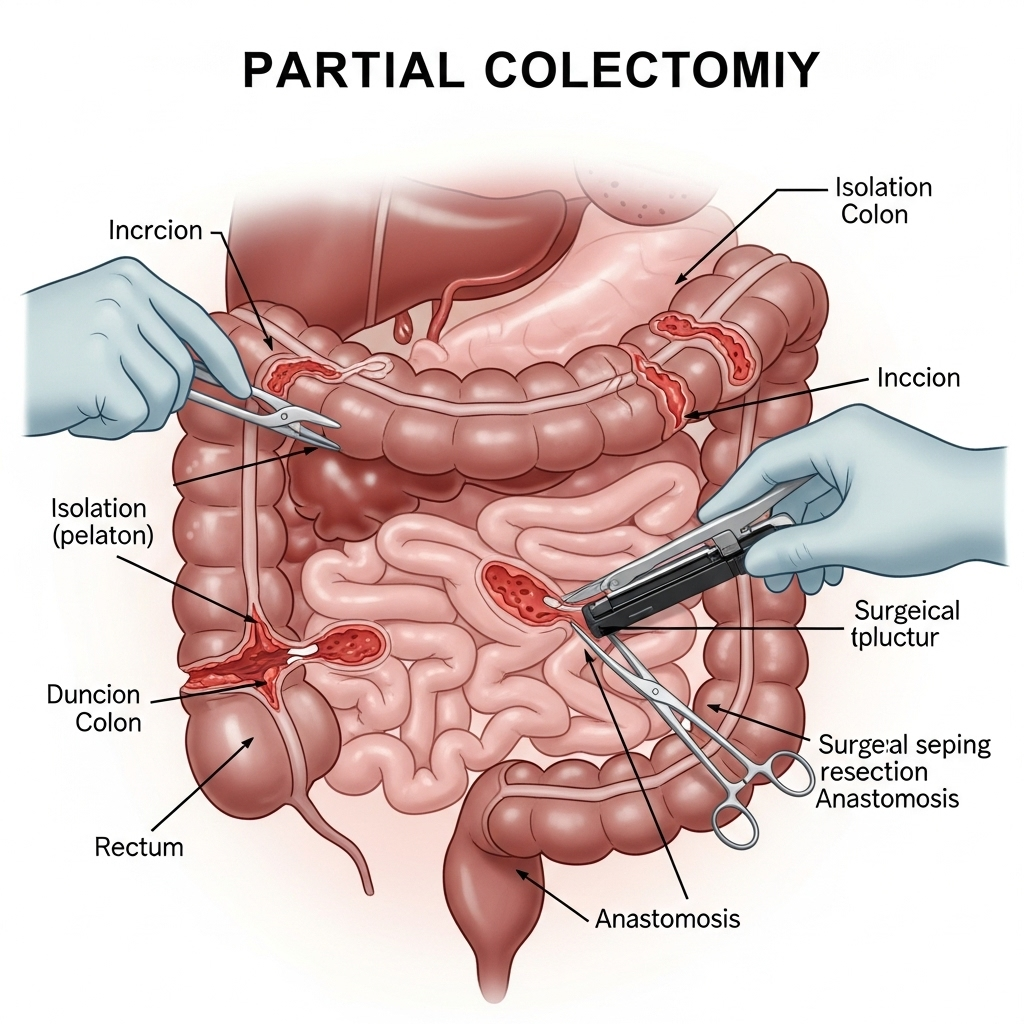
**Partial Colectomy**, also known as **Bowel Resection** or **Colon Resection**, is a surgical procedure where a diseased or damaged section of the colon (large intestine) is removed. This surgery is a critical treatment for various serious conditions, including colorectal cancer, severe diverticulitis, and inflammatory bowel disease (such as Crohn's disease or ulcerative colitis). After removing the affected segment, the healthy ends of the colon are typically reconnected. While Dr. Neeraj Dhar, a leading Gastroenterologist, does **not** perform these surgeries himself, he plays an essential role in the **comprehensive care** of patients undergoing partial colectomy in Faridabad, focusing on accurate diagnosis, pre-operative optimization, and expert post-operative gastrointestinal management.
Understanding Partial Colectomy and its Purpose:
The primary goal of a partial colectomy is to remove the diseased part of the colon to alleviate symptoms, prevent complications, and, in the case of cancer, remove the tumor and surrounding affected tissue to achieve a cure or control disease progression. The procedure aims to restore the normal function of the digestive tract as much as possible.
Indications for Partial Colectomy:
Partial colectomy is recommended for a range of conditions, including:
- **Colorectal Cancer:** To remove tumors and associated lymph nodes, especially when the cancer is localized.
- **Severe Diverticulitis:** For recurrent episodes, complications like abscess formation, perforation, fistula, or obstruction that don't respond to medical treatment.
- **Inflammatory Bowel Disease (IBD):** Such as Crohn's disease or ulcerative colitis, when medical therapies fail, or complications like strictures, fistulas, or severe bleeding occur.
- **Large or Dysplastic Colon Polyps:** If polyps are too large to be removed endoscopically or show signs of becoming cancerous.
- **Bowel Obstruction:** Caused by tumors, strictures, or severe adhesions.
- **Bowel Perforation:** A hole in the colon wall requiring immediate surgical repair.
- **Severe Gastrointestinal Bleeding:** When the source of bleeding is identified in a specific segment of the colon and cannot be controlled by other means.
Types of Partial Colectomy Procedures:
The extent of colon removal depends on the condition and its location. Surgeries can be named based on the part of the colon removed (e.g., right colectomy, left colectomy, sigmoid colectomy, transverse colectomy). The surgical approaches include:
1. Laparoscopic Colectomy (Minimally Invasive):
- This is a common approach where the surgeon makes several small incisions in the abdomen.
- A laparoscope (a thin tube with a camera) and specialized instruments are used to perform the surgery.
- The diseased segment is removed, and the remaining healthy ends are reconnected.
- **Benefits:** Smaller incisions, reduced pain, shorter hospital stay, faster recovery, and less scarring.
2. Open Colectomy:
- Involves a single, larger incision in the abdomen.
- This approach may be necessary for complex cases, very large tumors, extensive inflammation, or in emergency situations (e.g., bowel perforation).
3. Robotic Colectomy:
- A more advanced minimally invasive technique offering enhanced precision and visualization, especially beneficial for complex resections.
Anastomosis and Ostomy:
- **Anastomosis:** In most cases, after the diseased part is removed, the remaining healthy ends of the colon are surgically joined together.
- **Ostomy (Colostomy or Ileostomy):** If immediate reconnection is not safe or possible (e.g., due to severe infection or inflammation), a temporary or permanent ostomy may be created. This involves bringing an end of the bowel through an opening in the abdominal wall (stoma) to collect waste in an external bag. A temporary ostomy can often be reversed in a later procedure.
Dr. Neeraj Dhar's Indispensable Role in Patient Care:
Dr. Neeraj Dhar, as an expert Gastroenterologist, provides critical support to patients requiring partial colectomy. His role includes:
- **Accurate Diagnosis and Staging:**
- Performing **Colonoscopy** to identify the exact location and nature of lesions, take biopsies, and assess the extent of inflammatory bowel disease.
- Utilizing **Endoscopic Ultrasound (EUS)** for precise staging of colorectal cancers, especially in the rectum, which helps in surgical planning.
- Differentiating surgical conditions from other medical gastrointestinal issues, ensuring appropriate and timely referral.
- **Pre-operative Optimization:** Collaborating with the surgical team to optimize the patient's bowel health through thorough bowel preparation, nutritional counseling, and managing any concurrent medical conditions to minimize surgical risks.
- **Management of Inflammatory Bowel Disease:** For IBD patients, Dr. Dhar provides continuous medical management and helps determine the optimal timing for surgery, and can manage medical therapy post-surgery if needed.
- **Post-operative Complication Management:** Providing expert endoscopic or medical management for potential post-surgical GI complications such as:
- **Anastomotic Strictures:** Endoscopic dilation of narrowing at the reconnection site.
- **Bleeding:** Endoscopic control of any post-surgical bleeding.
- **Ileus/Bowel Dysfunction:** Medical management for prolonged bowel inactivity.
- **Long-Term Follow-up and Surveillance:** For cancer patients or those with IBD, Dr. Dhar conducts regular colonoscopies and other surveillance to monitor for disease recurrence or new lesions, ensuring long-term digestive health.
- **Multidisciplinary Collaboration:** Working closely with colorectal surgeons, surgical oncologists, radiologists, and pathologists to ensure a holistic and tailored treatment plan for each patient.
Partial colectomy is a significant procedure, and a collaborative approach involving gastroenterologists like Dr. Neeraj Dhar is vital for optimal patient outcomes. His expertise in diagnostic procedures and comprehensive GI management before and after surgery ensures that patients receive the best possible care in Faridabad.