

Bile Duct Injury Management
- GI & Bariatric Surgery
- Whipple Surgery
- Bariatric Surgery
- Liver Resection
- Gastro Esophageal Surgeries
- Colorectal Surgeries
- Appendectomy
- Hemorrhoidectomy
- Partial Colectomy
- Nissen Fundoplication
- Peptic / Gastric Ulcer Treatment
- Piles Surgery
- Gastrointestinal Surgery
- Surgery for Morbid Obesity
- Hepatopancreaticobiliary Surgery
- Post-Cholecystectomy Bile Duct Injury
- Incisional Hernia
- Minimally Invasive Surgery
- Gallbladder (Biliary) Stone Treatment
Bile Duct Injury Management
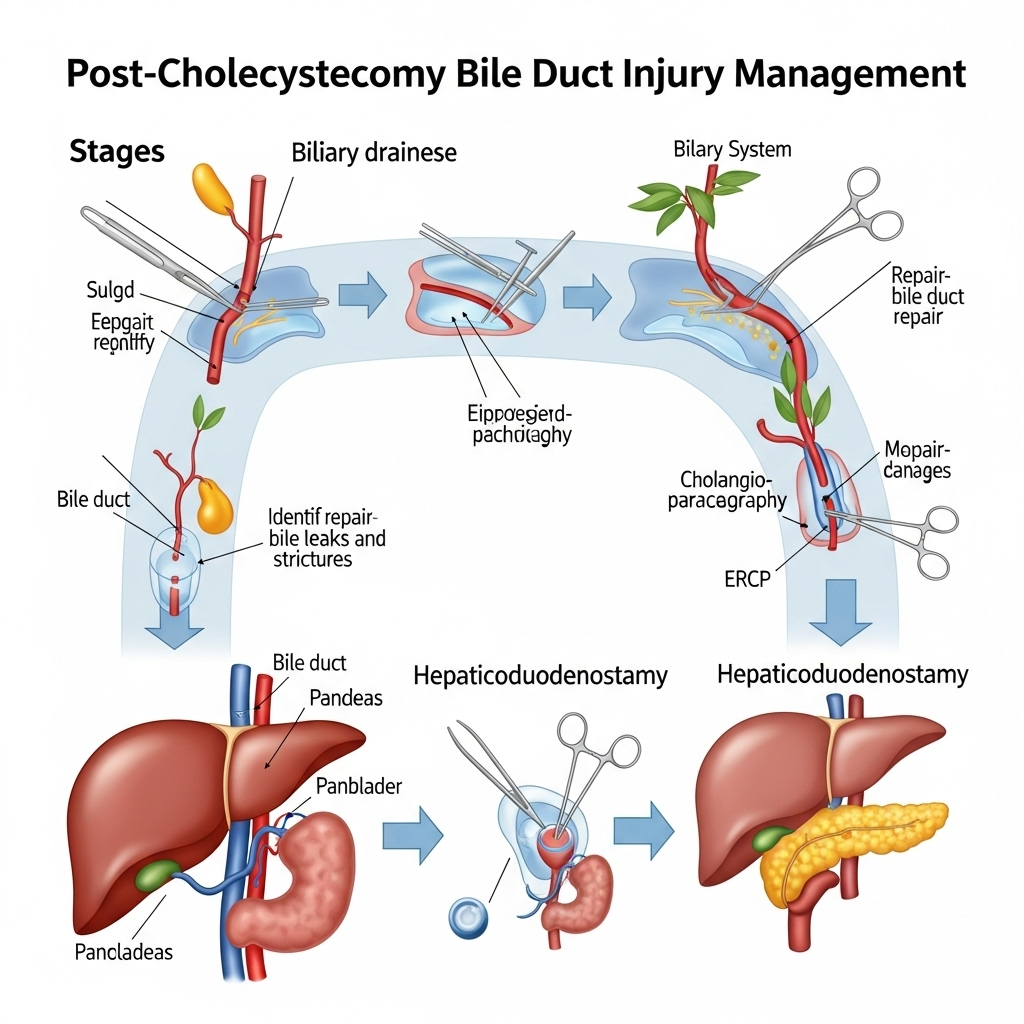
Expert Endoscopic Management of Bile Duct Injuries
**Bile duct injuries** are serious and challenging complications, most commonly occurring during gallbladder removal surgery (cholecystectomy). These injuries can lead to significant morbidity if not promptly and expertly managed. Dr. Neeraj Dhar, a highly experienced **Gastroenterologist** in Faridabad, specializes in the precise endoscopic diagnosis and effective non-surgical management of bile duct injuries, particularly post-cholecystectomy bile duct injuries, offering a minimally invasive approach to recovery.
Understanding Bile Duct Injuries:
The bile ducts are a network of tubes that carry bile (a digestive fluid produced by the liver) from the liver and gallbladder to the small intestine. An injury can result in bile leakage or a stricture (narrowing) of the duct, leading to various complications. While rare, these injuries are severe and require specialized care.
Common Symptoms of Bile Duct Injury:
Symptoms often appear days to weeks after gallbladder surgery, or can be acute. They include:- **Jaundice:** Yellowing of the skin and eyes, due to bile buildup.
- **Abdominal pain:** Often severe, localized in the upper right quadrant of the abdomen.
- **Fever and chills:** Indicating infection (cholangitis).
- Nausea and vomiting.
- Dark urine and pale, clay-colored stools.
- Abdominal distension or fluid accumulation from bile leakage (biloma).
Dr. Neeraj Dhar's Specialized Approach to Management:
As a leading therapeutic gastroenterologist, Dr. Neeraj Dhar's expertise is central to the management of bile duct injuries:
1. Accurate Diagnosis:
- **Clinical Assessment & Lab Tests:** Initial evaluation including liver function tests and bilirubin levels.
- **Advanced Imaging:** Utilizing techniques such as Ultrasound, CT scans, and particularly **MRCP (Magnetic Resonance Cholangiopancreatography)** to non-invasively visualize the bile ducts and identify the nature and location of the injury.
- **Endoscopic Retrograde Cholangiopancreatography (ERCP):** This is Dr. Dhar's primary tool for both diagnosis and treatment. During ERCP, a flexible endoscope is passed through the mouth, stomach, and into the duodenum. A small catheter is then inserted into the bile duct, and contrast dye is injected to obtain X-ray images, precisely pinpointing the injury, leak, or stricture.
2. Endoscopic Treatment (Minimally Invasive):
Most bile duct injuries, especially leaks and some strictures, can be successfully managed endoscopically by Dr. Dhar using ERCP-guided techniques, avoiding the need for open surgery:
- **Bile Duct Stenting:** Placement of plastic or self-expanding metal stents across the injury site or stricture to bridge the defect, keep the duct open, and allow it to heal. Stents promote drainage and reduce pressure.
- **Bile Leak Drainage:** For bile leaks, stents are used to divert bile flow past the leak, allowing it to close naturally. Sometimes, nasobiliary drainage (a small tube from the bile duct out through the nose) may be used for temporary drainage.
- **Balloon Dilation:** For strictures, a balloon can be used to dilate (widen) the narrowed segment of the bile duct, often followed by stent placement to maintain patency.
- **Removal of Retained Stones:** If gallstones or other debris are contributing to the injury or obstruction, they can be removed endoscopically.
3. Multidisciplinary Collaboration:
For highly complex bile duct injuries that may not be amenable to endoscopic repair, Dr. Dhar collaborates closely with specialized **GI and Hepato-Pancreatico-Biliary (HPB) surgeons**. He plays a vital role in the pre-surgical evaluation and often the initial stabilization through endoscopic drainage, ensuring the patient is optimally prepared for any necessary surgical reconstruction.
4. Post-Treatment Follow-up:
Ongoing monitoring with imaging and repeat endoscopic procedures (for stent removal or exchange) is essential to ensure complete healing and prevent long-term complications like recurrent strictures or cholangitis.
If you or a loved one are experiencing symptoms of a bile duct injury or have been diagnosed with one, seeking expert care from a specialized gastroenterologist like Dr. Neeraj Dhar is paramount. His advanced endoscopic skills and comprehensive approach offer the best chance for successful recovery and improved quality of life in Faridabad.