

ERCP Procedures - CBD Stone Removal & Biliary Stenting
- Advanced Endoscopy
- Upper GI Endoscopy
- Lower GI Endoscopy (Colonoscopy)
- ERCP (CBD Stone Removal / Stenting)
- EUS Guided Procedures (FNA/FNB, Drainage)
- Single / Double Balloon Enteroscopy
- Esophageal / Antral Stenting
- Esophageal & Anorectal Manometry
- Foreign Body Removal
- PEG Tube Placement
- POEM (Peroral Endoscopic Myotomy)
- STER (Submucosal Tunneling Endoscopic Resection)
- ESD (Endoscopic Submucosal Dissection)
- EMR (Endoscopic Mucosal Resection)
- Spyglass for Pancreatic Biliary Pathology
- Gastrointestinal Bleeding
- Biliary & Pancreatic Stenting
- Anti Reflux Procedures
Endoscopic Retrograde Cholangiopancreatography (ERCP)
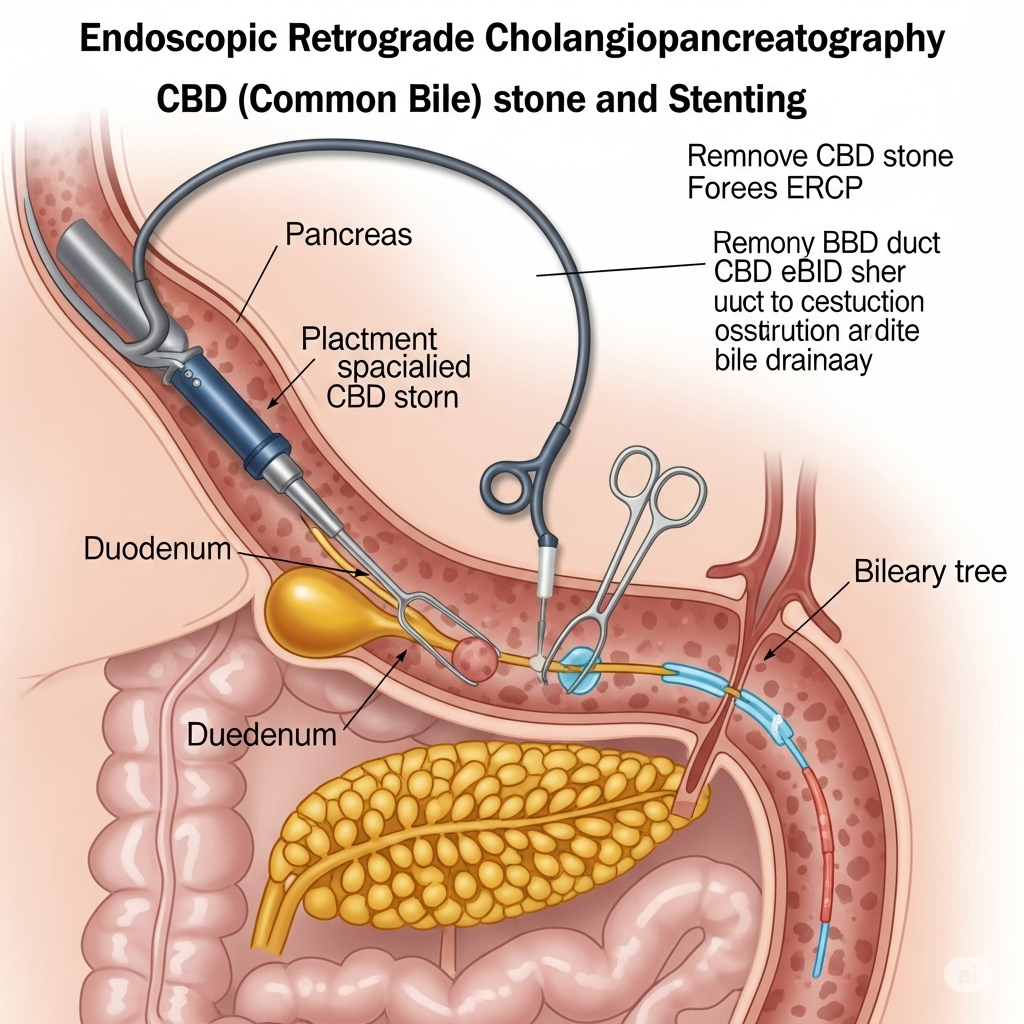
ERCP: Advanced Endoscopic Solutions for Biliary and Pancreatic Conditions
Endoscopic Retrograde Cholangiopancreatography (ERCP) is a highly specialized, minimally invasive procedure used by Dr. Neeraj Dhar to diagnose and treat conditions affecting the **bile ducts, gallbladder, and pancreatic ducts**. It combines the use of a flexible, lighted endoscope with X-ray imaging to provide detailed views and perform interventions within these delicate structures.
What is ERCP?
ERCP involves inserting a special side-viewing endoscope through the mouth, down the esophagus, past the stomach, and into the duodenum, where the opening of the bile and pancreatic ducts (the ampulla) is located. A thin catheter is then guided through the endoscope into these ducts, and a contrast dye is injected. This dye outlines the ducts on X-ray images, revealing blockages, stones, strictures, or tumors. Once identified, Dr. Dhar can perform various therapeutic procedures during the same session.
Common Indications for ERCP:
ERCP is primarily a therapeutic procedure performed when there is suspicion or confirmed issues in the biliary or pancreatic systems. Common reasons for ERCP include:
- Common Bile Duct (CBD) Stones: Removal of gallstones that have moved from the gallbladder into the bile duct, causing pain, jaundice, or cholangitis (bile duct infection).
- Biliary Strictures: Opening narrowed bile ducts caused by inflammation, injury, or scarring, often by placing a stent (a small tube).
- Malignant Obstruction (Cancers): Diagnosing and providing palliative relief for blockages caused by tumors in the bile duct or pancreas, typically by placing a stent to allow bile flow and relieve jaundice.
- Acute Cholangitis: Draining infected bile ducts.
- Pancreatic Duct Stones or Strictures: Addressing blockages in the pancreatic duct that can cause pancreatitis.
- Sphincter of Oddi Dysfunction: Diagnosing and treating spasms or narrowing of the muscle controlling the flow of bile and pancreatic fluid.
- Unexplained Jaundice: Investigating the cause of yellowing of the skin and eyes when other tests are inconclusive.
The ERCP Procedure: What to Expect
- Preparation: You will be asked to fast for at least 6-8 hours before the procedure. It's crucial to inform Dr. Dhar about all your medications, especially blood thinners, as they may need to be stopped or adjusted. You should also discuss any allergies, particularly to contrast dye or seafood.
- Sedation/Anesthesia: ERCP typically requires deep sedation or even general anesthesia to ensure your comfort and minimize movement during the procedure.
- During the Procedure: You'll lie on your stomach or side. Dr. Dhar will advance the endoscope into your duodenum. Once the ampulla is located, a small catheter is inserted into the bile or pancreatic duct. Contrast dye is injected, and X-ray images are taken. Based on the findings, Dr. Dhar will perform the necessary interventions, such as:
- Sphincterotomy: A small cut in the muscle opening (sphincter) of the bile duct to widen it and facilitate stone removal or drainage.
- Stone Extraction: Using specialized instruments like balloons or baskets to remove stones from the bile duct.
- Stent Placement: Inserting a plastic or metal stent into the bile or pancreatic duct to keep it open and ensure drainage.
- Biopsy/Brushings: Obtaining tissue samples to check for cancer or other conditions.
- Duration: The procedure can take anywhere from 30 minutes to over an hour, depending on the complexity of the case and interventions performed.
Recovery and Post-Procedure Care:
- After ERCP, you will be monitored in a recovery area for several hours until the sedation wears off.
- You may experience a sore throat, mild abdominal discomfort, or bloating.
- Dr. Dhar will provide specific instructions regarding diet, activity, and when to resume medications.
- The most significant potential complication is post-ERCP pancreatitis, which will be monitored in the recovery period.
Why Choose Dr. Neeraj Dhar for ERCP Procedures?
Dr. Neeraj Dhar is a highly experienced and skilled gastroenterologist in Faridabad, renowned for his expertise in performing complex ERCP procedures. With his advanced training and state-of-the-art equipment, he offers precise diagnosis and effective therapeutic interventions for a wide range of biliary and pancreatic conditions. Dr. Dhar prioritizes patient safety, comfort, and optimal outcomes, ensuring thorough pre-procedure evaluation and meticulous post-procedure care. His compassionate approach and extensive experience make him a trusted choice for advanced endoscopic treatments like ERCP.
If you have been diagnosed with bile duct stones, strictures, or other pancreatic-biliary issues, or are experiencing related symptoms, consult Dr. Neeraj Dhar for a comprehensive evaluation and expert ERCP treatment.